Posts

The Common Migraines In Children

Image
Migraines in children are very common. Estimates indicate that 3.5–5% of all children will experience recurrent headaches consistent with migraine. Child migraines treatment are consists of identifying triggering factors, providing pain relief, and considering prophylaxis. No specific diagnostic test is available; the diagnosis is made by history and examination. Possible reasons for the current presentation, including past history, previous test results, allergies, and current and previous medication usage. Family history of headache Quality of the headache Other aspects of the headache Manifestations of migraine may vary according to patient age, as follows: Infants may present with only episodic head banging Preschool children often have episodes involving an ill appearance, abdominal pain, vomiting, and the need to go to sleep; they may exhibit pain by irritability, crying, rocking, or seeking a dark room in which to sleep Children aged 5-10 years typically have bifrontal, bitempo...


Chiropractors And The Chiropractic Neck Adjustment

Image
 Some swear by chiropractors, saying the work they perform not only relieves pain, but also often addresses the source of their aches, twinges, and throbs. Chiropractors specialize in assessing, diagnosing and managing conditions of the spine. They are highly trained in finding the cause of pain in the spine. That's why people experiencing neck pain often turn to chiropractic care for help.  Before starting the chiropractic neck adjustment , your neck pain chiropractor will undertake a full assessment. This will involve taking details about your condition, current health and medical history, and performing a physical examination. Sometimes it may be necessary to refer you for other tests, such as X-rays, MRI scans or blood tests. It is important for your chiropractor to gather as much information about your neck pain as possible so that an accurate diagnosis can be made. Your chiropractor will explain what is wrong, what can be done and what can be expected from chiropractic t...

The Chiropractic Neck Adjustment

Image
  Neck pain is the worst kind of overachiever. It’s so common that it’s the fourth-leading cause of disability globally, following ischemic heart disease, cerebrovascular disease, and lower respiratory infection. Nearly 30 percent experience it each year. And it’s not always centralized in the neck. It can radiate across your whole upper body, affecting your shoulders, arms and chest and can even cause headaches. Living with neck pain can be miserable, making it hard to focus and get through the day. Neck pain can be debilitating and may interfere with day-to-day life, including your ability to sleep, feel productive, and enjoy time with friends and family. And it affects more than just your physical body. Studies have shown that chronic pain can have an impact on a person’s mental health; up to 80% of patients with chronic pain are affected by severe depression. The Chiropractic Neck Adjustment Chiropractic neck adjustments, called cervical manipulation, loosen up the joints of th...

Natural TMJ Remedies

Image
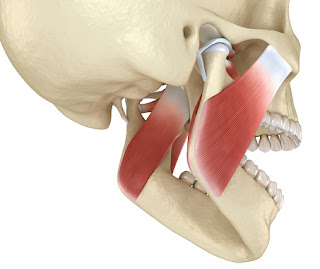
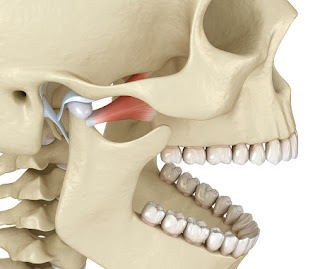
 TMJ disorder, also called temporomandibular joint dysfunction (TMD or TMJD), can cause extreme discomfort and pain to people who have it. According to the National Institute of Dental and Craniofacial Research, about 5% to 12% of Americans suffer with TMJD.   Each side of the head has TMJ, which sits just in front of the ears. The temporomandibular joint merges the mandible (lower jaw) and the temporal bone of the skull. TMJ is one of the most intricate joints in the body. Why is this so? The TMJ enables the movement of the jaw in many directions from moving forward and back, opening and closing, to gliding side to side. These movements allow us to perform important actions such as chewing, yawning, and talking.  Similar to how the spine has discs, the TMJ also has a disc within it. The disc absorbs shock and force whenever the joint moves, including when eating and during other movements. Symptoms and Signs of TMD  TMD can arise from different causes, and the ...

The Natural And Effective Remedies For TMJ Disorder

Image
Temporomandibular joint disorders, more commonly known as TMJ, are usually the result of inflamed and painful chewing muscles around your jaw. For some, it’s a once-in-a-while issue that can come from too much chewing, like indulging in a piece of gum all afternoon. For others, however, TMJ disorder can be a chronic issue that results in constant pain and discomfort. For most people, pain in the area of the jaw joint or muscles does not signal a serious problem. Below are the natural remedies for TMJ disorders . The causes of TMJ disorder is relatively subjective, but may be linked to stress fractures, an imperfect bite, tooth grinding or tooth clenching related to stress. Luckily, a TMJ massage can act as an effective, non-medicinal way to relieve chronic TMJ pain. Here are some tips that can help you address the underlying issues no matter what the cause. Strengthening exercises are best to perform between TMJ flare-ups. During times of intense pain, they can make the pain worse. Her...

Symptoms And Effects Of Fibromyalgia In Women

Image
Still, researchers aren’t sure why women have a higher risk for developing fibromyalgia than men. The only way to test for it is to rule out other possible conditions. Fibromyalgia is a chronic condition that causes fatigue, widespread pain, and tenderness throughout the body. The condition affects both sexes, although women are far more likely to develop fibromyalgia. Between 80 and 90 percent of people who get a diagnosis are women, according to the National Institutes of Health. Sometimes men receive a misdiagnosis because they may describe fibromyalgia symptoms differently.  Women often report higher pain intensity than men. The reasons behind this may be related to hormones, immune system differences, or genes. Read on to learn how different fibromyalgia symptoms and what is the effects of fibromyalgia in women . Symptoms of fibromyalgia    The primary symptoms of fibromyalgia are:   Widespread pain throughout the body   A heightened, painful response to pr...

Fibromyalgia In Women

Image
 Fibromyalgia is more common in women than men, who may experience symptoms differently. For example, women tend to report higher levels of pain, and they often have additional symptoms, such as heavy or painful menstruation. Fibromyalgia symptoms vary from person to person. Some describe the pain as sharp and shooting, while others report a dull ache. Many doctors dismissed people with fibromyalgia. Because the disease was so poorly understood, these doctors mistakenly believed that symptoms were faked. Some analysts speculate that this may be because doctors historically tended to disregard women’s pain. In this article, we explore the effects of fibromyalgia in Women . We also describe the common treatments. Stronger menstrual pain in women with fibromyalgia Menstrual period cramps can be mild or painful, depending on the woman. In a report by the National Fibromyalgia Association, women with the condition have more painful periods than usual. Sometimes the pain fluctuates with ...

Simple Scoliosis Stretches To Relieve The Pain

Image
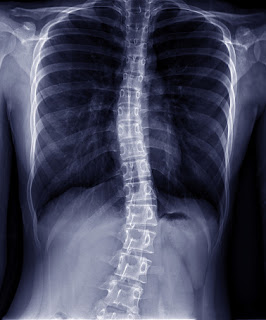
 Scoliosis is a spine condition that occurs when the spine curves or twists to the side. This can pull the ribcage out of position and put strain on the muscles of the back, causing pain and discomfort. Scoliosis isn’t a rare condition. About 7 million people in the United States develop some form of scoliosis that could need treatment from a specialist. Although it often appears in children, scoliosis can develop at any time. People who have this condition may: be born with it (congenital) develop it as a young child (early onset) develop it as an older child or teenager (adolescent idiopathic) develop it as an adult (degenerative or de novo) Below are some simple scoliosis relief stretches you can do at home or in the gym to temporarily relieve back pain. Stretching with scoliosis is most beneficial when done on a regular basis; start with a few times a week, then work your way up. Chest Stretch Stand with your feet shoulder-width apart and arms in front of your chest Pull your ...

All You Need To Know About Scoliosis

Image
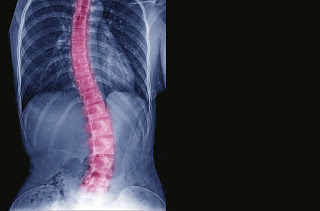
 Spinal Cord is made up of small bones called vertebrae that are stacked on top of each other. It also has a natural curve that helps you bend and move. When you have scoliosis, your spine curves more than it should. It forms a "C" or "S" shape. The condition is often diagnosed during the first seven years of a child’s life. Category The largest category of scoliosis is idiopathic scoliosis, a term used to refer to cases that have no definite cause. Idiopathic scoliosis is broken down by age group: Infant: 0 to 3 years Juvenile: 4 to 10 years Adolescent: 11 to 18 years Adult: 18+ years Adolescent idiopathic scoliosis is the most common. Types Doctors identify a cause for an estimated 20 percent of scoliosis cases. These consist of different types of scoliosis, including: congenital, in which spinal deformities are apparent at birth neurological, when nerve abnormalities affect muscles in the spine Scoliosis can also be categorized as either structural or nonstructur...

Chiropractic Care for Herniated Discs

Image
 It’s normal to be a little nervous about the unknown. If you haven’t tried chiropractic care before, rest assured, there is evidence that shows that chiropractic techniques such as spinal manipulation also called spinal adjustment and other forms of manual and mechanical therapy are safe and may be effective for relieving your pain and other symptoms. I encourage you to try chiropractic treatment for herniated discs . Herniated discs occur when the rubber pad that supports the spinal disc slips out of place.  Often times, the disc presses up against a nerve, which can lead to minor or excruciating pain.  A disc can herniate by stretching or moving the wrong way, lifting heavy objects improperly, getting into a car accident, or simply from getting older.  No matter how it happens, it is painful and isn’t something anyone should have to suffer from long-term.  Chiropractic Care for Herniated Discs At your first appointment, your chiropractor will take a complete ...

The Severity of Scoliosis and the Need for Scoliosis Relief

Image
 Scoliosis, the medical term for curvature of the spine, affects millions of people, an estimated 2 to 3 percent of the population. The most common form is idiopathic scoliosis in which the cause is unknown, and it most commonly occurs between the ages of 10 and 18. Girls are much more likely than boys to require treatment. The severity of scoliosis and the need for scoliosis relief is determined by the angle at which the spine is out of normal alignment. Milder cases generally require no treatment. If the spinal curve is less than 25 degrees, ongoing monitoring is recommended to see if the angle is increasing. If the curve is increasing over time, or if it is between 25 and 40 degrees, treatment with bracing is used. When the angle exceeds 45 to 50 degrees, surgical correction may be necessary. Scoliosis can be classified by etiology: idiopathic, congenital or neuromuscular. Idiopathic scoliosis is the diagnosis when all other causes are excluded and comprises about 80 percent of...

What You Can Do To Help Prevent Carpal Tunnel Syndrome

Image
 If your job or favorite hobby puts strain on your hands and wrists, you might wonder if you have carpal tunnel syndrome. Maybe you’ve got some symptoms, like tingling or numbness in your fingers, and you want to make sure it doesn’t get worse. The good news is that there’s a lot you can do to protect yourself and prevent your symptoms from getting worse. Carpal tunnel syndrome is caused by pressure on your median nerve. This nerve gives you feeling in your thumb and all your fingers except your pinky. When the median nerve goes through your wrist, it passes through a narrow path -- the carpal tunnel -- that’s made of bone and ligament. If you get any swelling in your wrist, this tunnel gets squeezed and pinches your median nerve, which causes your symptoms. There’s no one, surefire way preventing carpal tunnel syndrome . But if you reduce stress and strain on your hands and wrists as much as you can, you may keep it from getting worse. What You Can Do To Help Prevent It Here are s...

The Carpal Tunnel Syndrome

Image
 Carpal tunnel syndrome is caused by pressure on the median nerve. The carpal tunnel is a narrow passageway surrounded by bones and ligaments on the palm side of your hand. When the median nerve is compressed, the symptoms can include numbness, tingling and weakness in the hand and arm. The anatomy of your wrist, health problems and possibly repetitive hand motions can contribute to carpal tunnel syndrome. Proper treatment usually relieve carpal tunnel syndrome and restores wrist and hand function Symptoms  Carpal tunnel syndrome symptoms usually start gradually and include: Tingling or numbness. You may notice tingling and numbness in your fingers or hand. Usually the thumb and index, middle or ring fingers are affected, but not your little finger. You might feel a sensation like an electric shock in these fingers. The sensation may travel from your wrist up your arm. These symptoms often occur while holding a steering wheel, phone or newspaper, or may wake you from sleep. M...

What Is Herniated Discs

Image
 A herniated discs refers to a problem with one of the rubbery cushions (disks) that sit between the individual bones (vertebrae) that stack to make your spine. A spinal disk has a soft, jellylike center (nucleus) encased in a tougher, rubbery exterior (annulus). Sometimes called a slipped disk or a ruptured disk, a herniated disk occurs when some of the nucleus pushes out through a tear in the annulus. A herniated disk, which can occur in any part of the spine, can irritate a nearby nerve. Depending on where the herniated disk is, it can result in pain, numbness or weakness in an arm or leg. Many people have no symptoms from a herniated disk. Surgery is usually not necessary to relieve the problem. Symptoms Symptoms vary greatly, depending on the position of the herniated disc and the size of the herniation. If the herniated disc is not pressing on a nerve, the patient may experience a low backache or no pain at all. If it is pressing on a nerve, there may be pain, numbness or we...

The Truth About TMJ

Image
 The temporomandibular joints open, close, and move the jaw. These joints are under pressure from chewing, talking, and other motions. That means they are also a common source of pain, and muscle and joint problems. Chronic temporomandibular joint pain warrants a trip to the doctor or dentist to assess the cause. The following are the TMJ cause and treatments , keep reading. There are different causes of TMJ disorder, including arthritis or a jaw injury. But if TMD is related to tightness and imbalance in the TMJ muscles because of clenching, a professional jaw massage might be what the doctor ordered. Teeth grinding often plays a role, as does a habit of tensing the joint without realizing. TMJ problems often cause the following symptoms: Pain, particularly in the chewing muscles or jaw joint or an ache around your ear  Limited movement or locking of the jaw. Pain in the face, neck, or shoulders, or near the ear. Clicking, popping, or grating sounds when opening your mouth. T...

TMJ Cause, Effects And Treatments

Image
The temporomandibular (tem-puh-roe-man-DIB-u-lur) joint (TMJ) acts like a sliding hinge, connecting your jawbone to your skull. You have one joint on each side of your jaw. TMJ disorders — a type of temporomandibular disorder or TMD — can cause pain in your jaw joint and in the muscles that control jaw movement. TMJ disorders have many signs and symptoms. It's often hard to know for sure if you have TMJ, because one or all of these symptoms can also be present for other problems. Your dentist can help make a proper diagnosis by taking a complete medical and dental history, conducting a clinical examination and taking appropriate X-rays.   Some of the most common TMJ symptoms include: Headaches (often mimicking migraines), earaches, and pain and pressure behind the eyes A clicking or popping sound when you open or close your mouth Pain brought on by yawning, opening the mouth widely or chewing Jaws that "get stuck," lock or go out Tenderness of the jaw muscles A sudden cha...

Benefits And Risks Of Neck Exercises

Image
An activity as simple as doing the dishes may not sound like it works the neck, but it can. Think about the extra effort your neck requires to support the head while bending down to load the dishwasher or reaching up to put a dish back in the cabinet. Staying active and doing different tasks throughout the day puts the neck through a wide range of motions and helps keep it in shape. On the other hand, if you spend a lot of time sitting or being relatively inactive, your neck muscles become deconditioned. When the neck muscles are weaker and tighter, they’re more susceptible to painful strains and sprains.      Benefits Of Neck Exercises Neck exercises can help you to release tension, tightness, and stiffness. They can reduce pain and increase flexibility. A strong neck can help to prevent neck and cervical spine injuries as well. Researchers in a 2007 study recommended long-term neck muscle training to reduce pain and increase neck muscle strength and range of motion. Thi...

Things You Need To Know About Trigeminal Neuralgia

Image
 The trigeminal nerve is one of 12 pairs of nerves that are attached to the brain. The nerve has three branches that conduct sensations from the upper, middle, and lower portions of the face, as well as the oral cavity, to the brain. The ophthalmic, or upper, branch supplies sensation to most of the scalp, forehead, and front of the head. The maxillary, or middle, branch stimulates the cheek, upper jaw, top lip, teeth and gums, and to the side of the nose. The mandibular, or lower, branch supplies nerves to the lower jaw, teeth and gums, and bottom lip. More than one nerve branch can be affected by the disorder. Rarely, both sides of the face may be affected at different times in an individual, or even more rarely at the same time. What is trigeminal neuralgia ? Trigeminal neuralgia (TN), also called tic douloureux, is a chronic pain condition that affects the trigeminal or 5th cranial nerve, one of the most widely distributed nerves in the head. TN is a form of neuropathic pain, a...

Benefits Of Neck Exercises

Image
Neck pain exercises are a common part of almost any treatment plan for neck pain. A typical neck exercise program will consist of a combination of stretching and strengthening exercises, aerobic conditioning, and possibly trigger point exercises. This article focuses on neck exercises to relieve neck pain caused by posture problems, as well as the necessary precautions to take before starting such an exercise program.            Forward and Backward Tilt This can be done while you're seated or on your feet. Keep your moves slow and smooth. Start with your head squarely over your shoulders and your back straight. Lower your chin toward your chest and hold for 15-30 seconds. Relax, and slowly lift your head back up. Tilt your chin up toward the ceiling and bring the base of your skull toward your back. Hold for 10 seconds, then return to the start position. Repeat the set several times. Do it every day. Side Tilt Do this while standing, with your feet hip-wi...